Tree trimming in Atlanta, GA
Trimming done right keeps limbs off roofs, wires, signs and walkways and keeps the tree healthy for years. A certified arborist leads the work, and our crew climbs or lifts to reach every cut.
When a tree needs trimming
- Limbs touching or hanging over a roof, gutter, chimney or fence
- Branches blocking signs, lighting, driveways, entrances or sightlines
- Dead, cracked or broken limbs that can drop without warning
- A crowded canopy that rubs, shades out other plants or catches too much wind in a storm
- Hanging or partly torn limbs after a storm
Not sure which category your tree falls in? Send a photo with your estimate request. We will tell you whether it needs trimming, removal, or nothing yet.
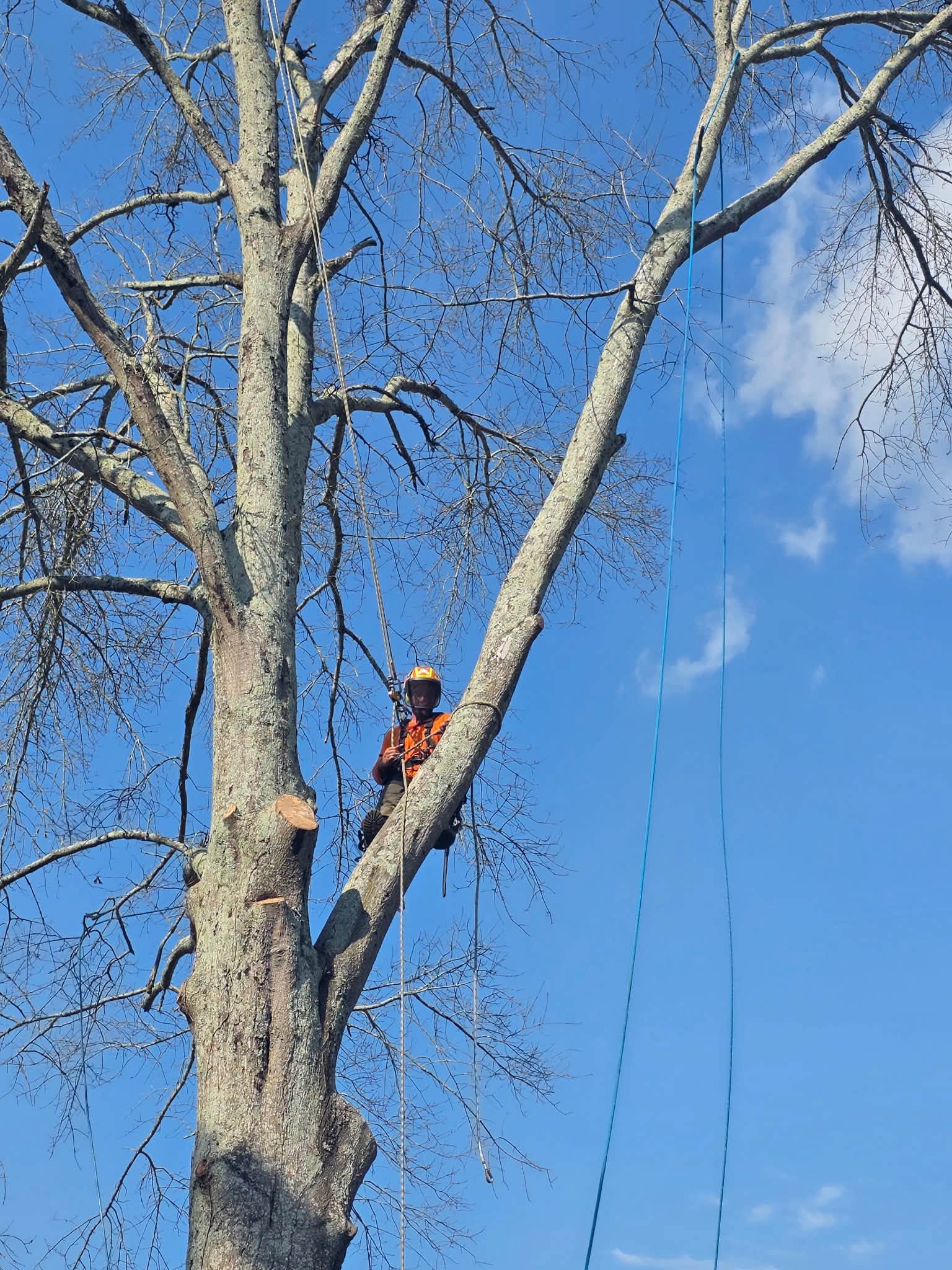
A One Two Tree climber working in a tree with ropes in place.
How we trim
- We look at the whole tree first. Structure, species, condition and what is underneath all shape the plan before any cut is made.
- Dead and hazardous wood comes out first. Broken, dead and badly attached limbs are removed before any shaping.
- Proper cuts, never topping. We cut back to a branch that can take over. Topping removes too much of the crown, weakens the tree and invites decay, so we do not do it.
- We climb or lift. Climbers reach inside the canopy, and aerial lifts reach where a climber should not go. Limbs are lowered on ropes instead of dropped onto roofs, gardens and cars.
- Chip and clean. Branches go through the chipper and the work area is left clean.
Trimming for businesses and multi-property owners
On commercial sites, trimming is about safety and visibility: clear signs, working lights, open sightlines at entrances and walkways free of low limbs. We plan the work around your hours, set up the work zone with cones and signs where needed, and clean up so the site is ready to use. For HOAs and managers with several properties, we can build a trimming schedule across sites. See commercial tree service and multi-property tree service.
Best time to trim trees in Georgia
Most trees tolerate pruning in the dormant season, from late fall through winter, and bare branches make the structure easier to read. Dead or hazardous limbs can come off at any time of year. Spring-flowering trees such as dogwood and redbud are usually trimmed right after they bloom, and crape myrtles need light, selective pruning rather than heavy cuts. For more detail, read the best times to trim trees.
What affects the price
Tree height and spread, how much work the tree needs, access for equipment, what is underneath the tree and how much debris there is all change the price. We give you a free written estimate after we look at the job, so you know the number before the work starts.
Questions about tree trimming
What is the difference between trimming and pruning?
People use the words interchangeably. Trimming usually means keeping a tree tidy and clear of structures. Pruning usually means removing specific branches for the tree's health or structure. Most jobs include both.
How often should trees be trimmed?
It depends on the species, age and site. Many mature trees do well with a check every few years. Fast growers, trees over structures and storm-damaged trees need attention sooner. When we visit, we can suggest a schedule for your trees.
Can trimming hurt my tree?
Bad trimming can. Removing too much at once, flush cuts and topping all stress a tree. Correct trimming removes only what the tree can afford to lose and leaves it healthier and safer.
Do you haul away the branches?
Yes. Debris handling is part of how we plan every job, and your written estimate says what is included. See our debris removal page for how we handle chips, logs and cleanup.
Related
Get a free estimate
Send a photo of the tree if you can. It helps us understand the job before we visit.
Prefer to talk?
Call (404) 944-1086. Monday to Friday, 8 am to 5 pm.